By Tristen Hawkins | City of Davidson, Dodge County
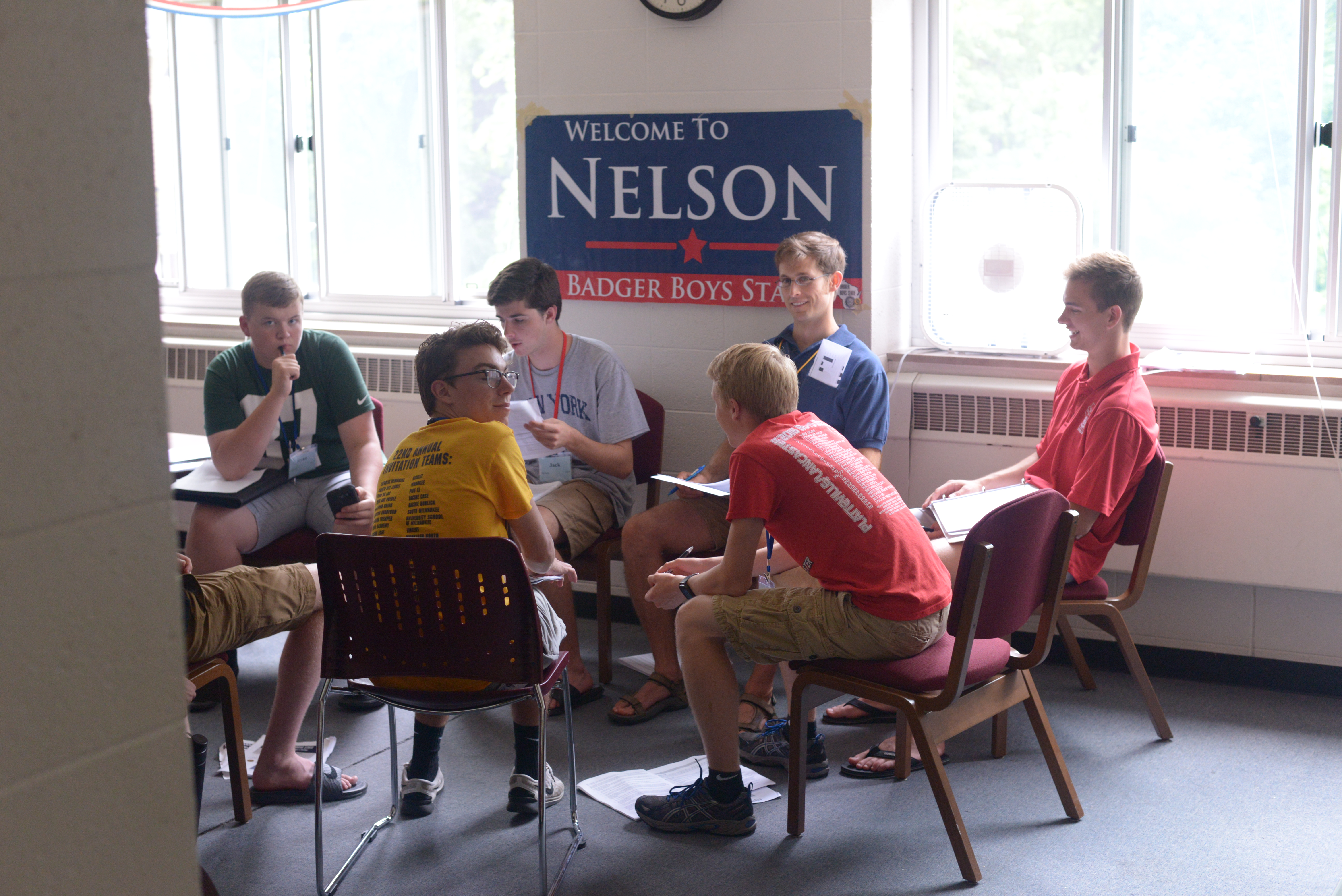
Today, some Badger Boys State citizens were faced with quite the predicament during an ethics discussion.
In the hypothetical situation, you are a trolley operator, and the brakes on the trolley malfunction while in motion. Ahead are five workers, sure to all die since you cannot stop the trolley, but you can see that the track splits ahead.
On the other track stands just one worker. You are still able to turn the train onto the track to kill the one but save the other five.
Most of the citizens elected to switch tracks and kill the lone worker in order to save the five.
A second situation was then introduced. In this hypothetical situation the five workers and the trolley remain the same, but instead of being the trolley operator you are a bystander, watching it all unfold.
You stand on a bridge above the track, and next to you stands an incredibly fat man, leaning over the bridge. You realize that if you were to push him off the bridge and in front of the trolley, it would cause the train to stop, saving the five workers.
When asked what they would do in this situation, most of the citizens decided to not push the fat man in front of the trolley.
But why?
The same thing results from both situations whether you elect to push the fat man or switch tracks you kill one man to save five. They tried to justify their decisions by saying that in the second hypothetical you are simply a bystander, and ethically, should not intervene. But wouldn’t it be wrong to allow five men to die when you could have allowed one to die?
What can be learned from discussions like this is that there never is a real answer to most of these dilemmas.
Instead they simply challenge you to think outside the box and construct creative conclusions and so you learn to work together and take other people’s thoughts and ideas into account.