By Tristen Hawkins | City of Davidson, Dodge County
Where does “Taps”, our lights out bugle call come from?
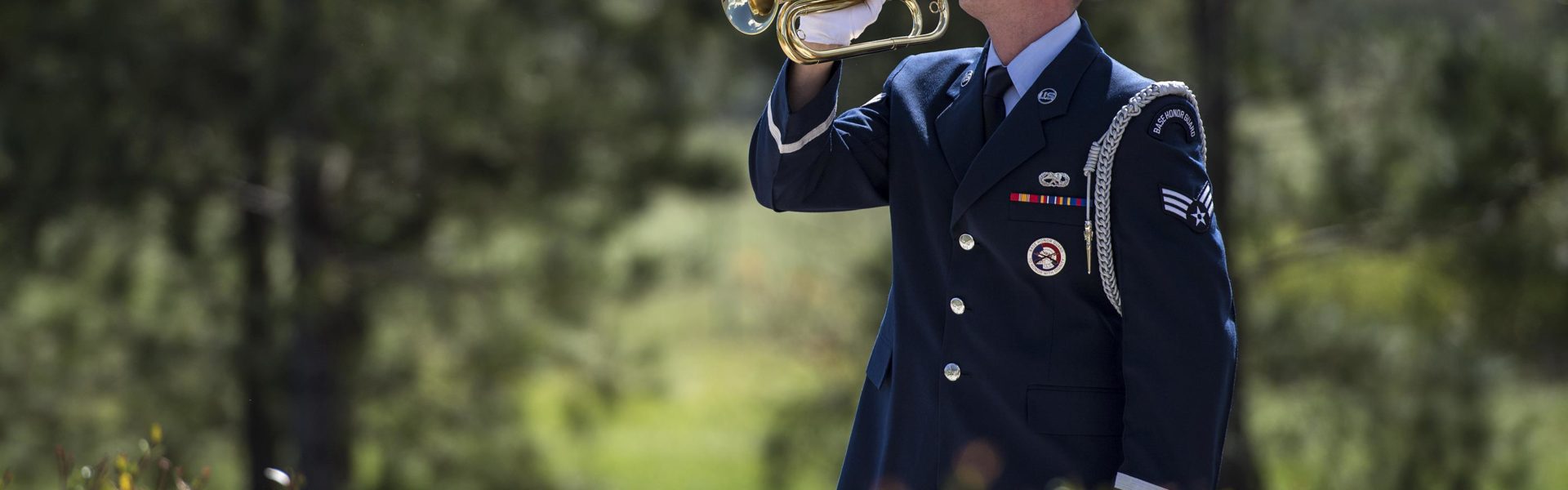
“Taps” is a bugle call played at dusk, during flag ceremonies, and at military funerals by the United States armed forces and is traditionally played on one trumpet but it can be played on several trumpets.
The tune finds its origin in an earlier bugle call known as the “Scott Tattoo,” which was used in the U.S. from 1835 to 1860. Scott Tattoo was transformed into its present form by the Union Army Brigadier General Daniel Butterfield, an American Civil War general and Medal of Honor recipient, to replace a previous French bugle call used to signal “lights out.”
Butterfield’s bugle player, Oliver Wilcox Norton, was the first to sound the new call. Within months “Taps” was used by both Union and Confederate forces and was officially recognized by the United States Army in 1874.
However, there are several legends concerning the origin of “Taps.”
The most common one states that a Union Army infantry officer, Captain Robert Ellicombe, first ordered “Taps” be performed at the funeral of his son, who was killed during the Peninsula Campaign. This unlikely story claims that Ellicombe found the tune in the pocket of his son’s clothing and performed it to honor his memory.
But there is no record of any man named Robert Ellicombe holding a commission as captain in the Army of the Potomac during the Peninsula Campaign.
While scholars continue to debate whether the tune was original or based on an earlier melody, few researchers doubt that Butterfield is responsible for the current tune. Regardless of origin “Taps” is a beautiful and timeless tune.